Why Does My Pain Move Around the Body?
Ever find that pain moves around your body? Usually, when we think of pain, an area becomes injured, the nerves are activated, and pain is localized to that area. But that’s not always the case.
Moving, or migratory, pain is most commonly associated with the joints. Instead of just staying localised, it presents as an unpredictable pattern of discomfort. A single joint might hurt one day, then another, or even a different part of the body (referred pain).
But why do you have pain that moves around your body? And what can you do about it? Find out more below.
What Does It Mean When Pain Moves Around the Body?
Pain that moves is described as how the symptoms show up not a diagnosis itself, the root cause can be anything from mechanical, inflammatory, neuropathic, or central (nervous‑system related). Not all moving pain is the same.
Fibromyalgia is the most common example of moving pain or migratory pain. The main symptom can shift from one area to another and is often accompanied by fatigue and sleep disturbances. The pain affects both muscles and joints.
Pain that moves around the body is commonly joint-related. Known as migratory arthritis, pain and inflammation move from one joint to another.
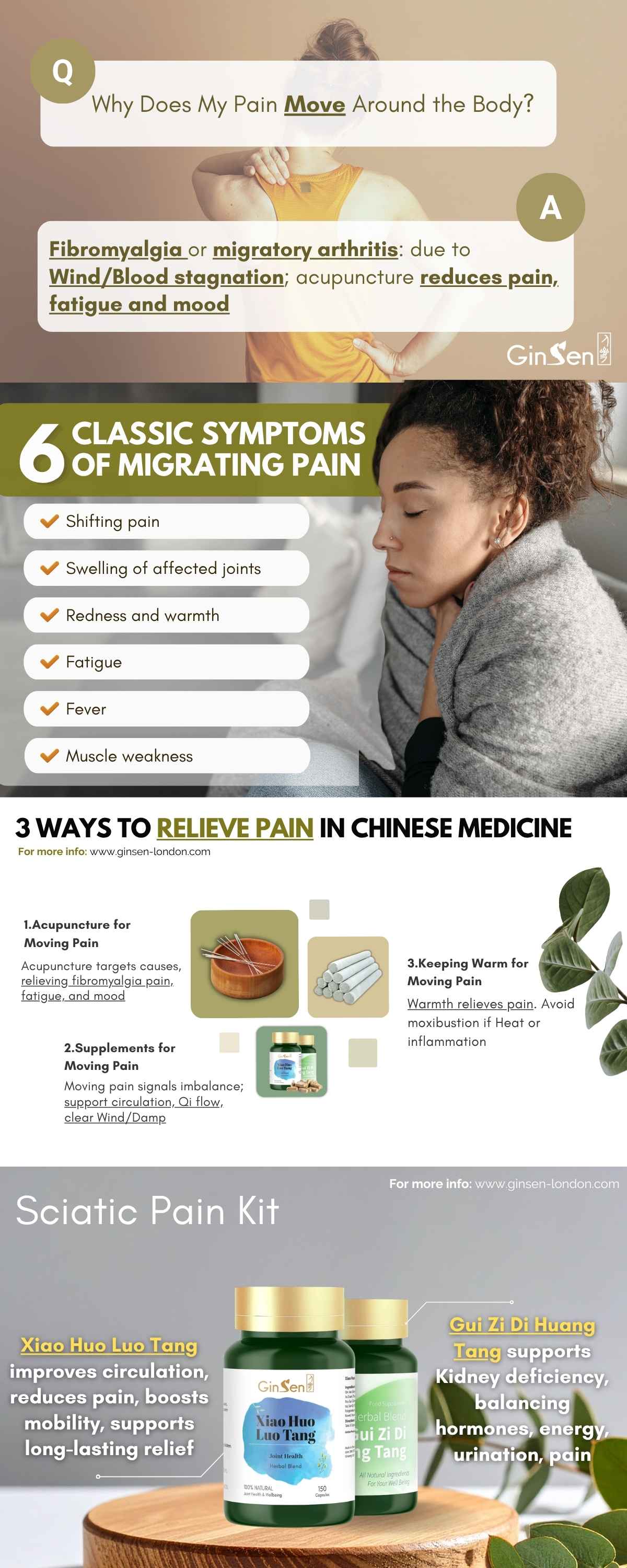
The classic symptoms of migrating pain include:
- Shifting pain
- Swelling of affected joints
- Redness and warmth
- Fatigue
- Fever
- Muscle weakness
Autoimmune conditions like rheumatoid arthritis and lupus often move from joint to joint, especially in the early stages. Pain is usually symmetrical, affecting the same joints on either side.
In contrast, metabolic or reactive conditions like gout, inflammatory bowel disease, or even osteoarthritis can cause asymmetrical joint pain. Pain may affect a single joint before spreading to other joints in the body.
Why Does Pain Move Around According to Chinese Medicine
In Traditional Chinese Medicine (TCM), moving pain occurs wind has invaded the body, causing the pain to move from one place to the other.
“When pain shifts from place to place, it suggests that wind has entered the body.”
Commonly linked to Wind pathogen, moving pain is often referred to as “wandering pain”, where pain shifts from one joint to another without a fixed location. Wind can enter the body due to external environmental factors, in some cases, it can also occur due to poor Qi flow. As the old saying in Chinese Medicine goes, “Where there is pain, there is no free flow; where there is free flow, there is no pain.”
Liver Qi Stagnation is another common cause when it comes to moving pain. In TCM, Liver is in charge of smooth flow of Qi, when a person is experiencing stress, upset or similar emotion, this can disrupt the flow of Qi through Liver. If the Qi is stagnant it causes blockage of channels leading to migrating pain often felt in the ribs, chest, abdomen, neck, or shoulders. When pain moves from place to place, it is often a sign of imbalance in circulation and energy flow within the body.

Pain That Worsens With Pressure vs Improves
Does your pain worsen with pressure?
The question might sound strange, but it’s crucial for diagnosis. In TCM, pain that worsens with pressure can indicate Blood Stagnation. Think of conditions associated with inflammation, injury, or structural injury.
For example, joint pain from arthritis, muscle strains, or localised tissue injury worsens with pressure on the affected area. The same isn’t true for fibromyalgia, however. That pain is truly linked to Pathogenic Wind.
Why Does This Matter?
If you’re not familiar with TCM, you might wonder why this is so important. Well, that’s simple — different diagnoses require different treatments.
Blood Stagnation is a specific pathological process. It requires targeted treatment to activate blood circulation and prevent further stasis. That could involve activating specific acupuncture points or using herbal remedies and dietary changes.
Pathogenic Wind, on the other hand, is treated by expelling the Wind to release the exterior. Nourishing the Qi and any Blood Deficiencies might occur alongside this treatment. But they’re not directly linked.
Why Cold Weather Intensifies Pain Conditions
Everyone feels pain worse in the cold. But it’s not just that your nerves become more sensitive or your muscles contract. The cold has a real effect on your underlying physiology.
According to TCM, cold obstructs the flow of qi and Blood. As circulation slows, the risk of pain increases. Think of cold as a contracting and slowing force. If you’re already prone to Wind-type wandering pain, a cold spell can make symptoms more pronounced.
This isn’t just imagination.
There’s real evidence to back up the claim. A 2019 study found a statistically significant relationship between low barometric pressure (BMP) and increased pain in patients with fibromyalgia. BMP is roughly related to air temperature. Cool weather causes BMP to drop. Whenever the BMP dropped, pain levels, stress levels, and pain unpleasantness all increased.
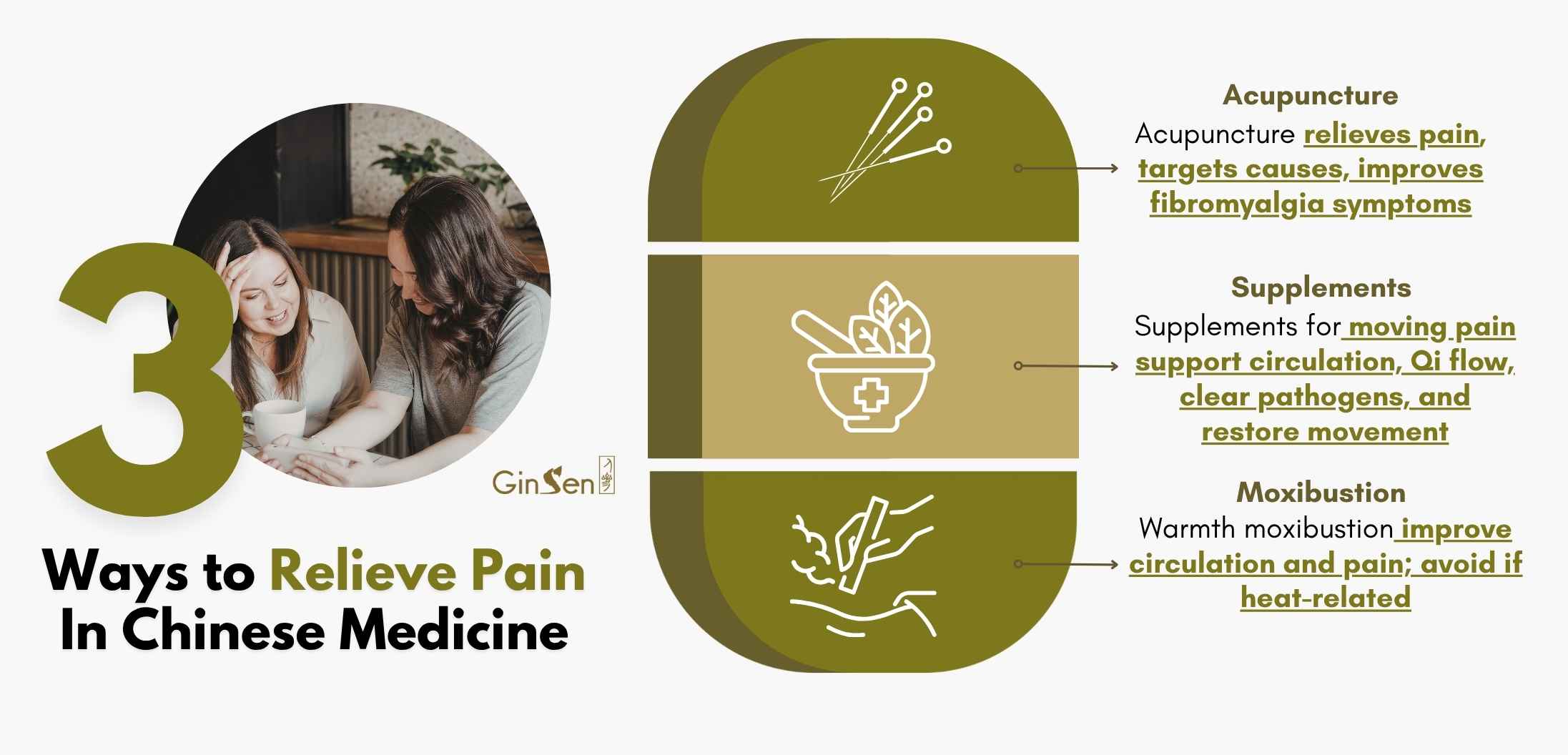
Acupuncture for Moving Pain
So, is there a solution? Acupuncture promises to relieve the pain by treating the underlying causes of the condition. It targets specific points in the body using fine needles. These needles activate the neuroendocrine system, altering the body’s function.
It’s suited for people with:
- Pain that shifts location (wandering or migratory pain)
- Muscle tightness or soreness that moves around (neck to shoulder to back)
- Pain that flares with stress, poor sleep, or fatigue
- People who are weather or cold-sensitive
The best part? It really works. A systematic review (the highest level of evidence) published in 2026 analysed 17 clinical trials involving over 1,000 patients. It was discovered that acupuncture reduced pain and improved depression and fatigue in people with fibromyalgia.
Supplements for Moving Pain
When pain moves from place to place, it is often a sign of imbalance in circulation and energy flow within the body. Supplements designed to “move” pain typically focus on promoting healthy blood circulation, supporting smooth Qi flow, and clearing pathogenic factors such as Wind, Damp, or Phlegm. By addressing the underlying imbalance rather than just masking symptoms, these formulas aim to stabilise discomfort and restore freer movement throughout the body.
-
Sciatic Pain Kit
Add to basket -
Xiao Huo Luo Tang
Select options This product has multiple variants. The options may be chosen on the product page


Xiao Huo Luo Tang warms and unblocks the channels, disperses cold, and moves blood and qi, making it effective for migratory or cold-damp pain. Its warming herbs like ginger and aconite penetrate deep, relieving stiffness, numbness, and heaviness while restoring smooth flow in the meridians.
-
Xiao Huo Luo Tang
Select options This product has multiple variants. The options may be chosen on the product page
Keeping Warm for Moving Pain
Keeping the body warm helps protect the meridians from external Wind and Cold, relaxes tight muscles, and promotes circulation, making it easier for energy and blood to flow smoothly. Wearing warm clothes, using heating pads, taking warm baths, can all help reduce pain.
Chinese Medicine treatments such as Moxibustion ently warms specific acupuncture points, can also be highly effective for moving pain by promoting circulation, expelling Cold, and restoring the flow of Qi and Blood. Moxibustion can also be carried out at home with at home Moxa sticks.
However, it is worth nothing that if your diagnosis of moving pain is due to Heat or inflammation is best to avoid warming any further as it may worsen the condition.
Traditional medical‑grade moxa sticks made from mugwort for use in moxibustion. These are the most direct product from GinSen to support warming the meridians and aiding circulation during at‑home moxa sessions

Final Thoughts
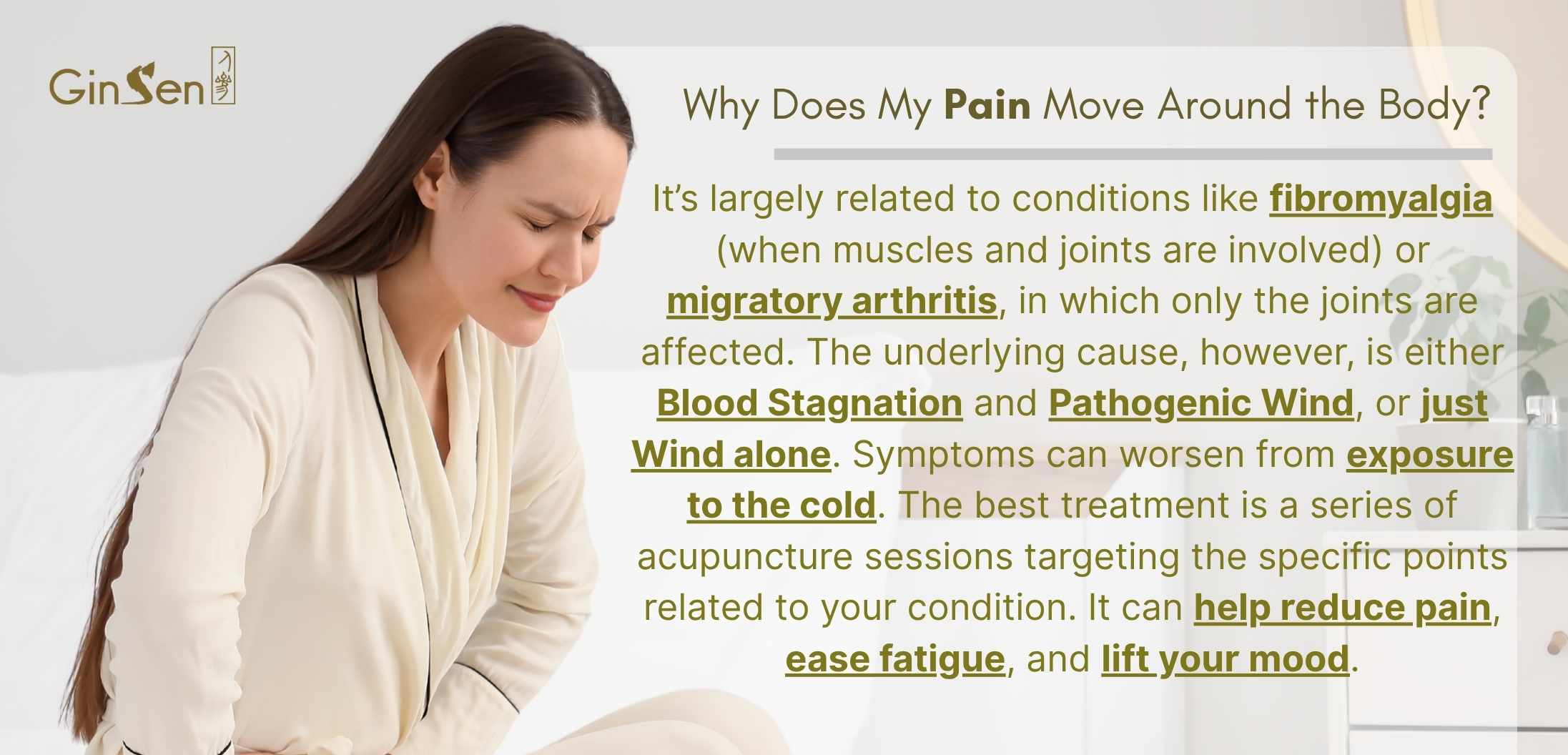
If you’ve been asking, “Why do I have pain that moves around my body?”, now you know. It’s largely related to conditions like fibromyalgia (when muscles and joints are involved) or migratory arthritis, in which only the joints are affected.
The underlying cause, however, is either Blood Stagnation and Pathogenic Wind, or just Wind alone. Symptoms can worsen from exposure to the cold.
The best treatment is a series of acupuncture sessions targeting the specific points related to your condition. It can help reduce pain, ease fatigue, and lift your mood.
* These statements have not been evaluated by the Food and Drug Administration. This information is not intended to diagnose, treat, cure, or prevent any disease. We can’t guarantee the treatment result, as the symptoms of conditions are unpredictable and vary greatly from person to person. The treatment length and recovery time also varies for individual. Please visit our clinics website: GinSen where a specialists will discuss your care and provide a consultation, and the treatment will be designed to meet your individual needs.